7480 N Delaware
Portland, OR
program: multifamily
size:8,600 sf (16 units)
status: completed 2026
The first in a series of high-density housing projects exploring new models of urban infill, 7480 North Delaware reimagines residential living along a low-density arterial corridor in North Portland. Standing across from an electrical substation, the building enters into dialogue with the infrastructure to create a gateway between adjacent neighborhoods, and a new form of dense urban dwelling for the area. The industrial exterior gives way to a warm, timber-clad inner realm organized around access balconies overlooking a planted courtyard. Each unit has extensive glazing, two to three exposures, and private covered decks that extend living space outdoors year-round.
contractor: Tieton
structural & civil: TM Rippey
landscape: Outdoor Scenerey
photographer: Jeremy Bittermann / JBSA
press:
Architectural Record
The Architect’s Newspaper
awards:
2026 AIA Oregon Merit Award
2026 AIA Oregon Merit Award


Madrona House
Seattle, WA
program: single family
size: 3300 sf
status: completed 2021
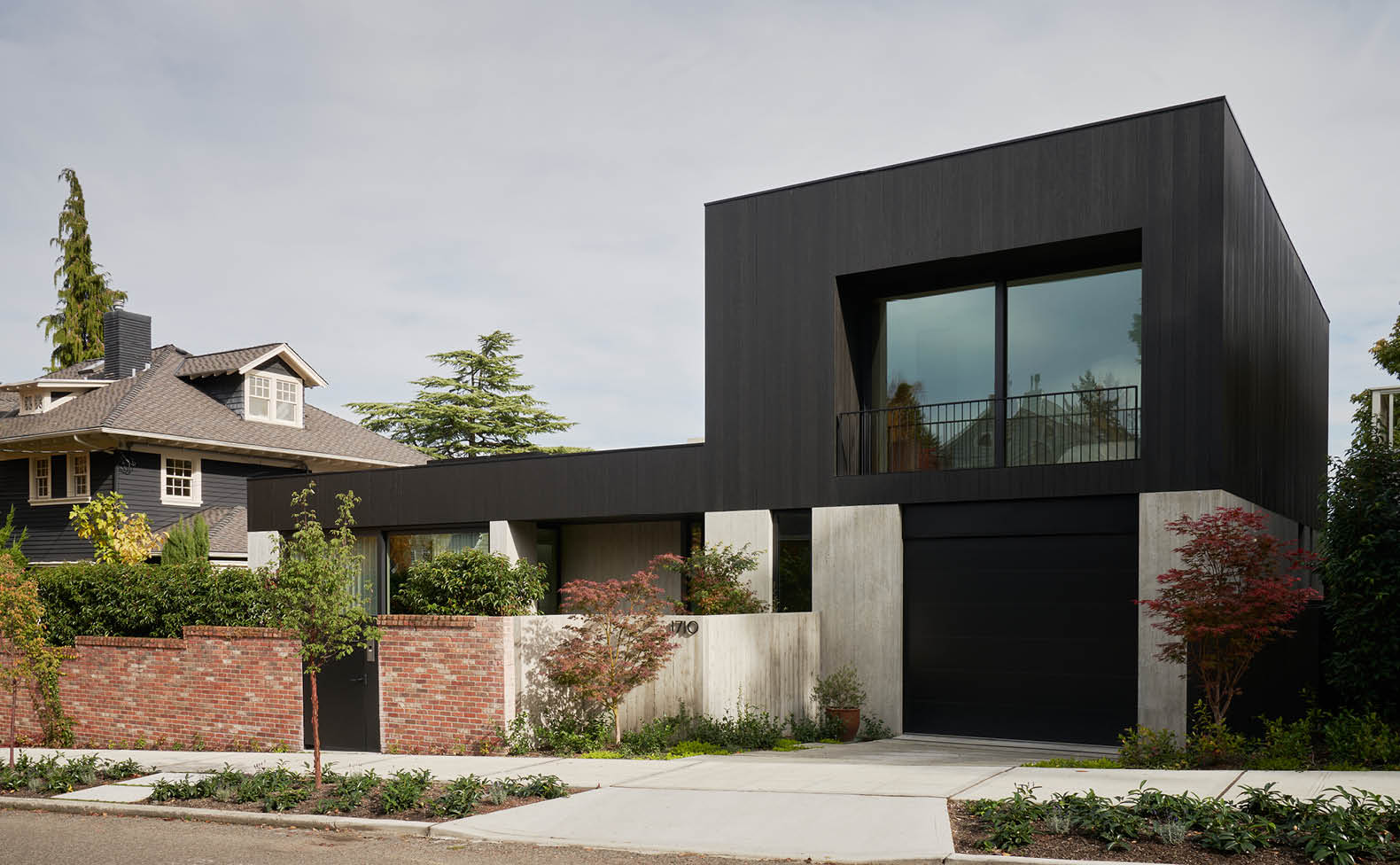
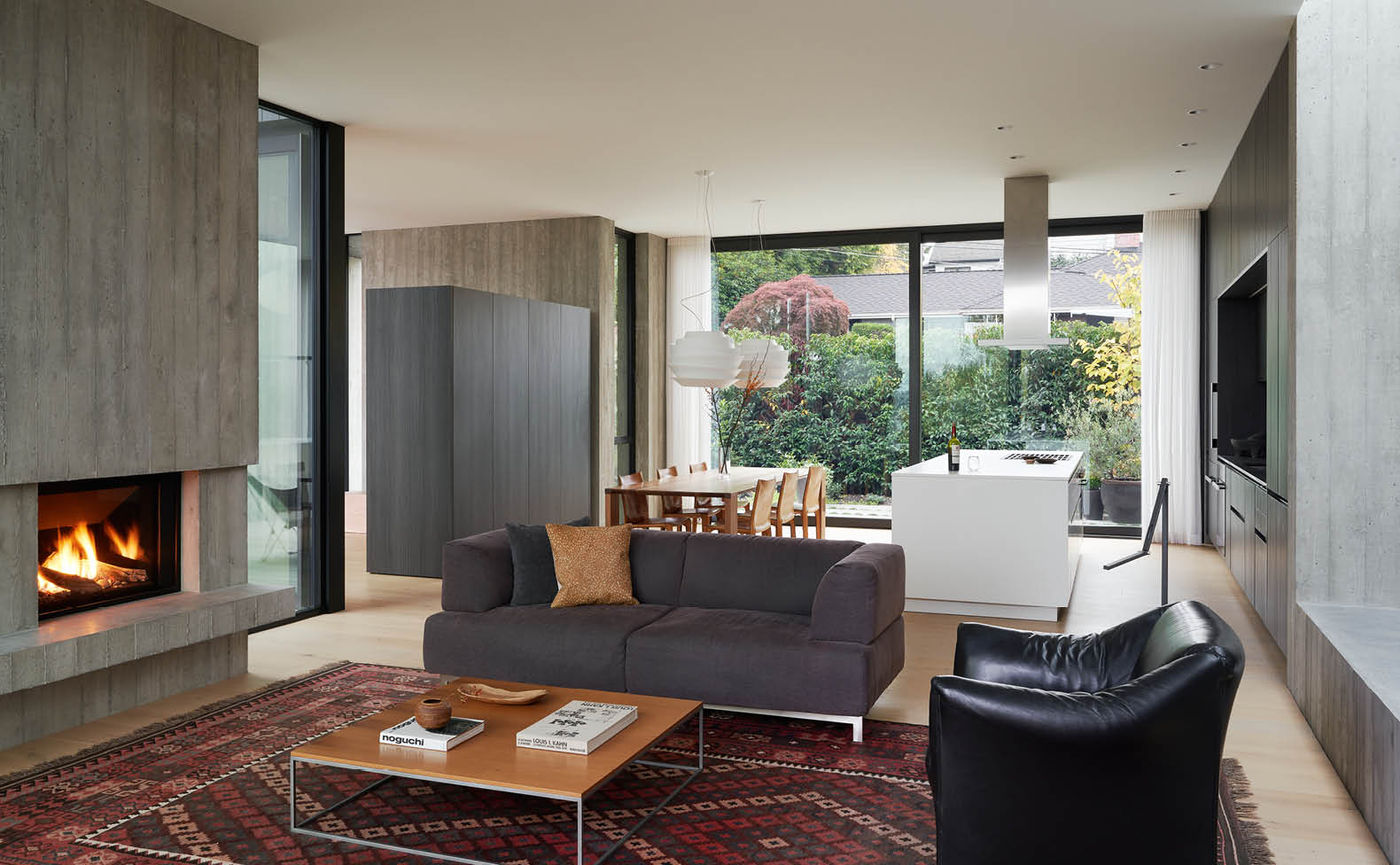
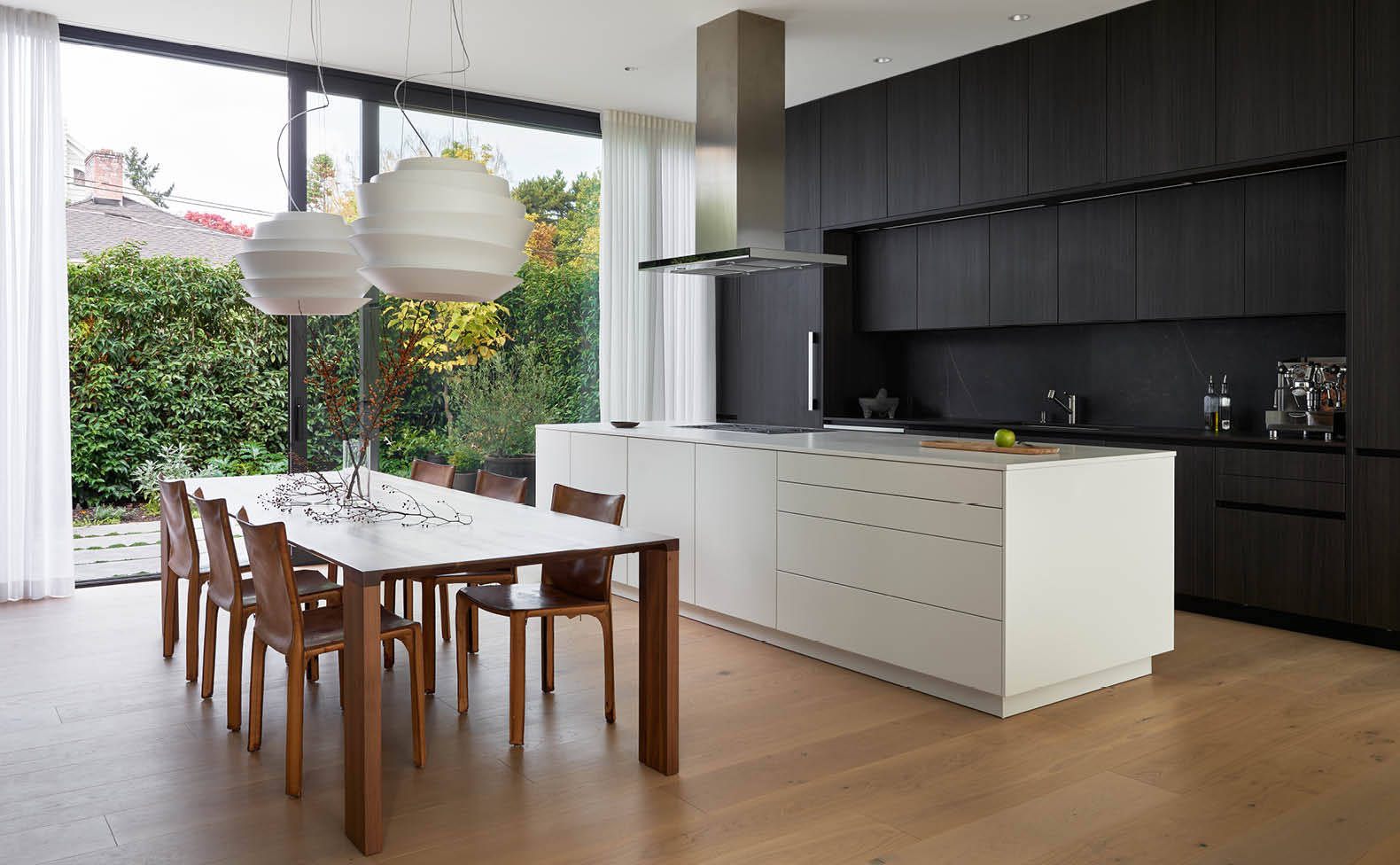
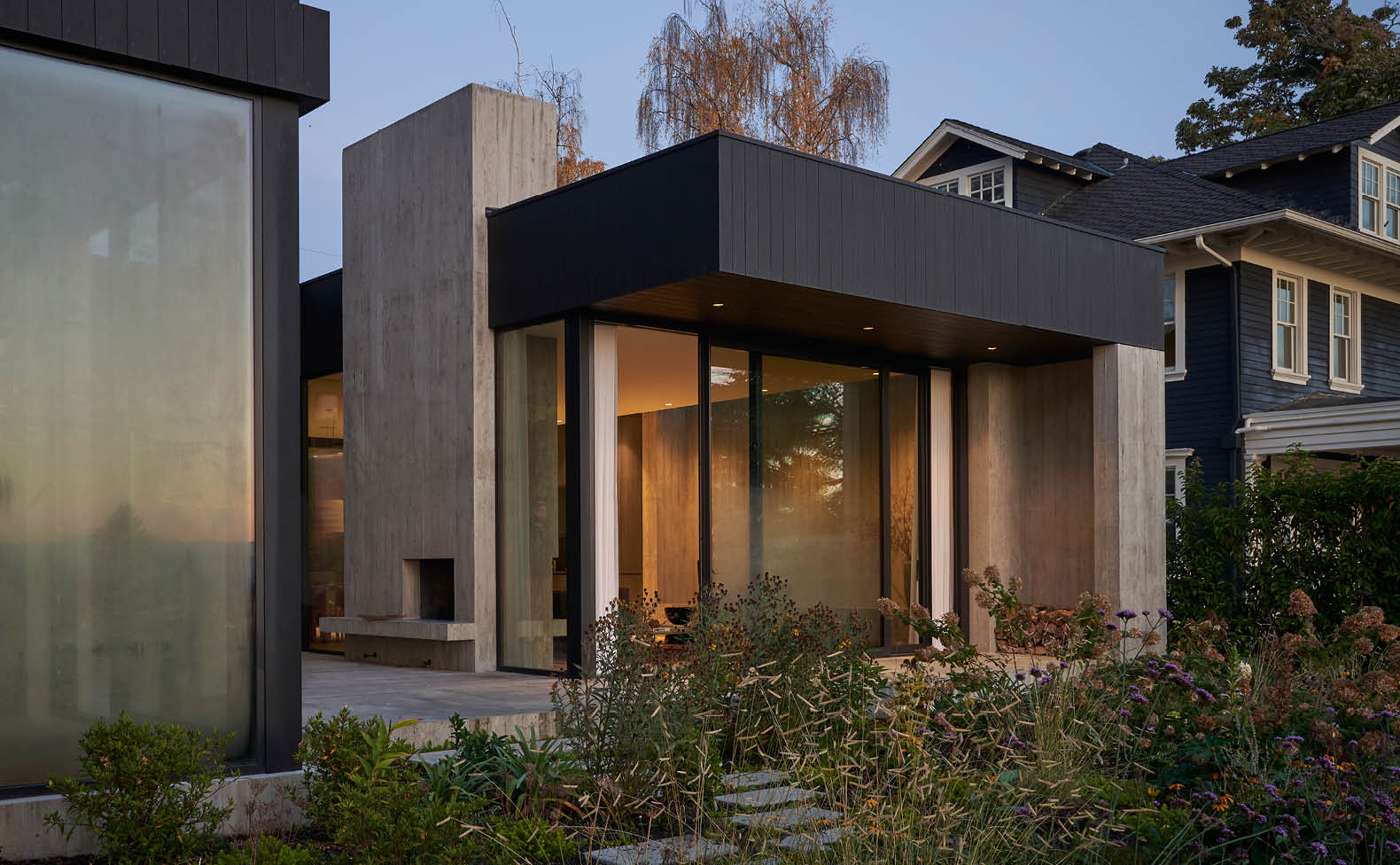
The Madrona House nestles into a historic Seattle hilltop neighborhood, looking east to Lake Washington and the Cascade Mountain Range beyond. Built for a downsizing couple that owned the historic craftsman house next door, the house was designed to maximize light and connection to the outdoors, with a strong sense of mass and materiality.
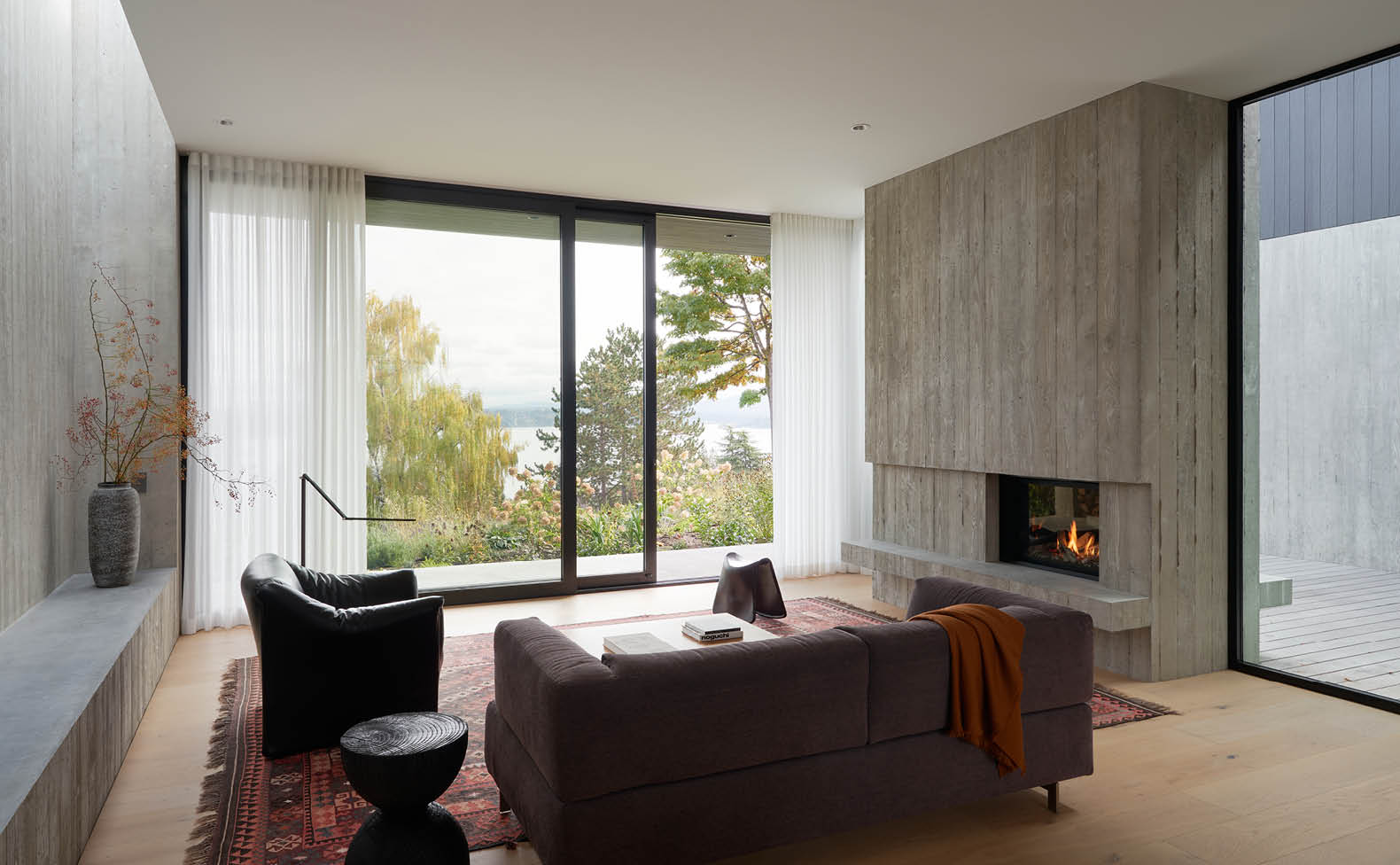
The home was designed as a plinth with thick walls and hearth rising out of it, capped by a carved wooden volume. The irregular textures of the concrete change with the time of day and the color of the sky through the seasons, giving a sense of heft and permanence to the home. Glazed openings are inset to the interior surface to express the thickness of walls, creating covered outdoor spaces where possible. Details like concealed headers, minimal exposed flashing, and a continuous reveal joint between the concrete and flush wood upper story accentuate the mass and elemental composition of the home. Light is diffused through the more open east and west ends of the home, as well as the courtyard, and carefully placed skylights to create a luminuous sanctuary from the surrounding city.
collaboration: Carsten Stinn Architecture
contractor: PH Robison
photographer: Kevin Scott
press:
New York Times
Portrait of Seattle
awards:
2023 AIA Oregon Citation Award
Seattle, WA
program: single family
size: 3300 sf
status: completed 2021
The Madrona House nestles into a historic Seattle hilltop neighborhood, looking east to Lake Washington and the Cascade Mountain Range beyond. Built for a downsizing couple that owned the historic craftsman house next door, the house was designed to maximize light and connection to the outdoors, with a strong sense of mass and materiality.
The home was designed as a plinth with thick walls and hearth rising out of it, capped by a carved wooden volume. The irregular textures of the concrete change with the time of day and the color of the sky through the seasons, giving a sense of heft and permanence to the home. Glazed openings are inset to the interior surface to express the thickness of walls, creating covered outdoor spaces where possible. Details like concealed headers, minimal exposed flashing, and a continuous reveal joint between the concrete and flush wood upper story accentuate the mass and elemental composition of the home. Light is diffused through the more open east and west ends of the home, as well as the courtyard, and carefully placed skylights to create a luminuous sanctuary from the surrounding city.
collaboration: Carsten Stinn Architecture
contractor: PH Robison
photographer: Kevin Scott
press:
New York Times
Portrait of Seattle
awards:
2023 AIA Oregon Citation Award








Jade Alley
Miami Design District, Miami, FL
in collaboration with SB Architects
program: mixed use alley revitalization
size: 6200 sf
client: DACRA / L Catterton
status: completed 2018
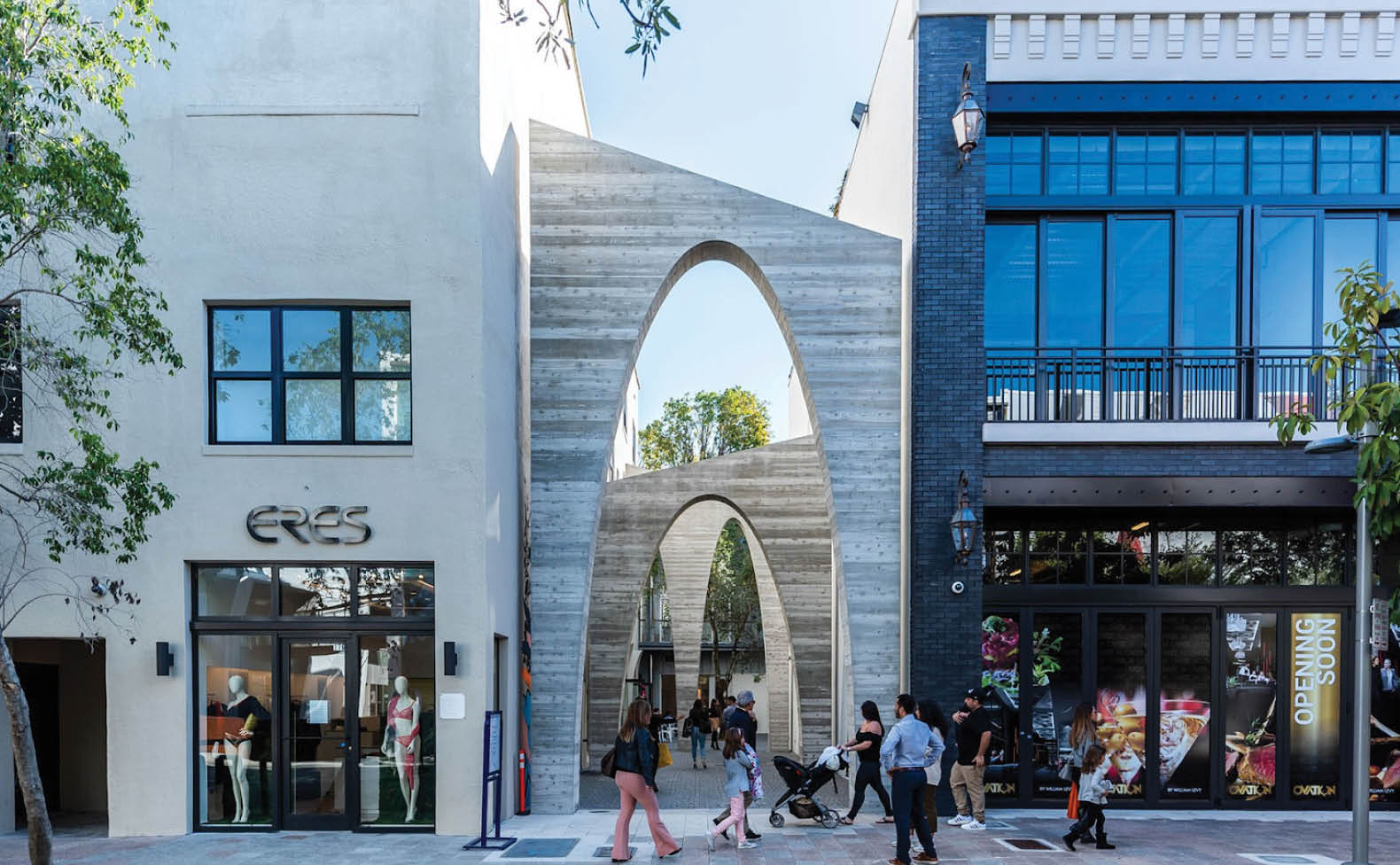
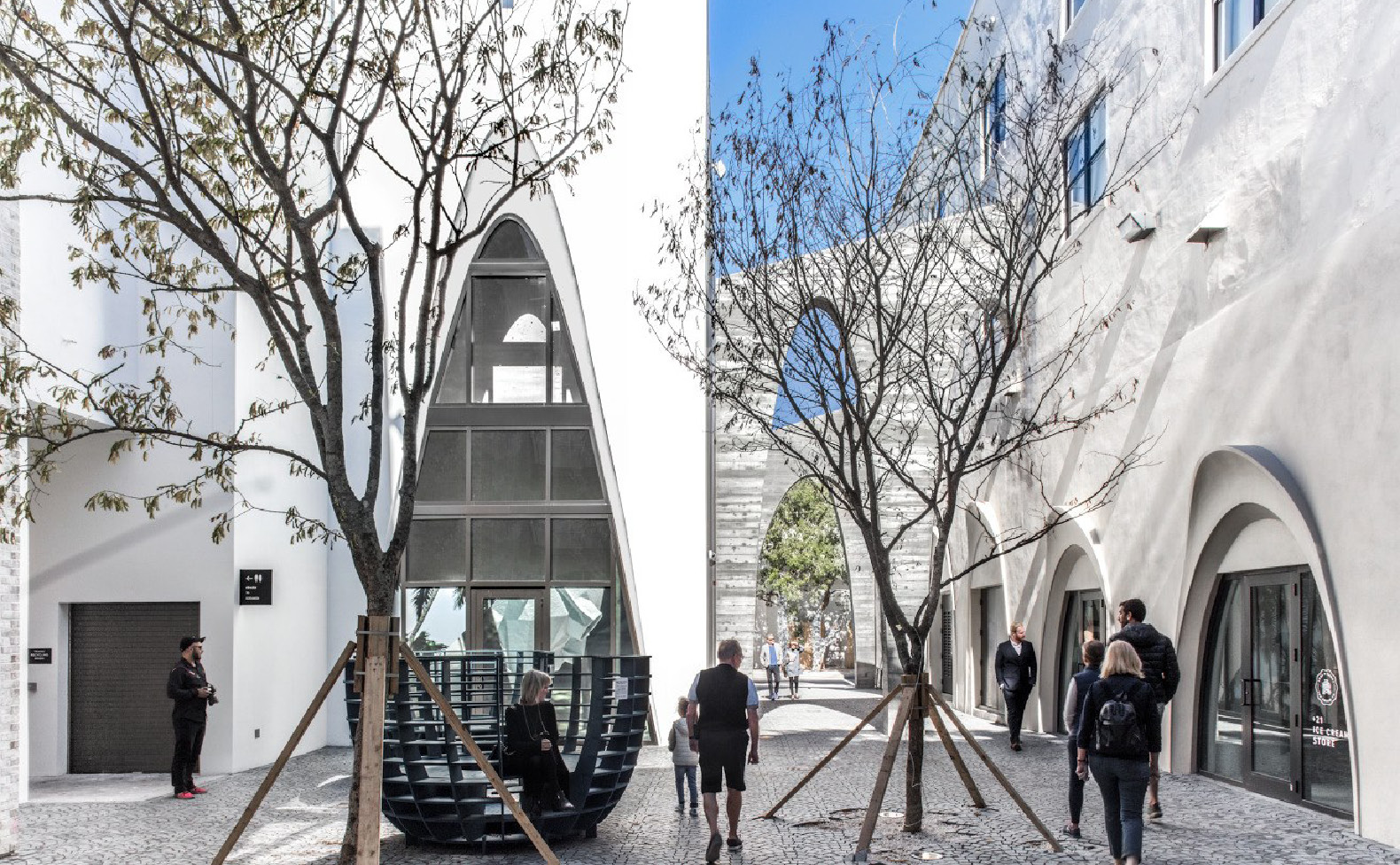
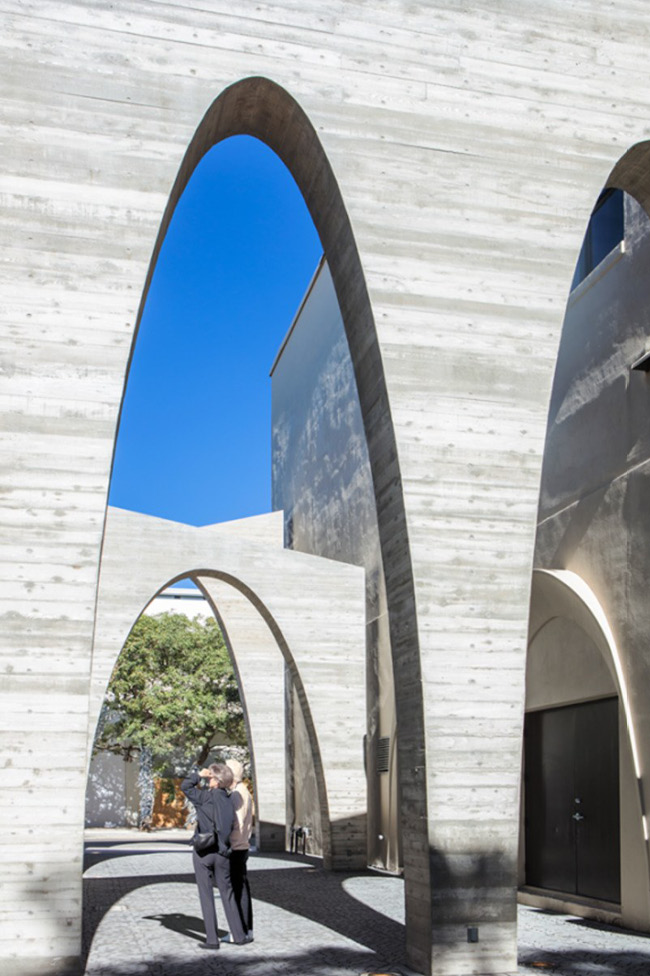
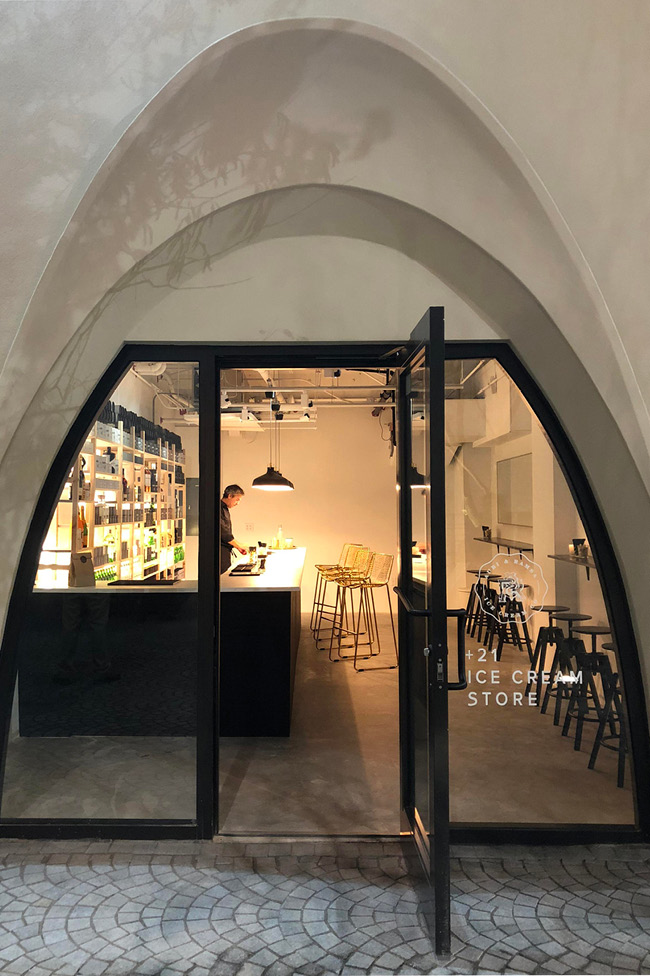
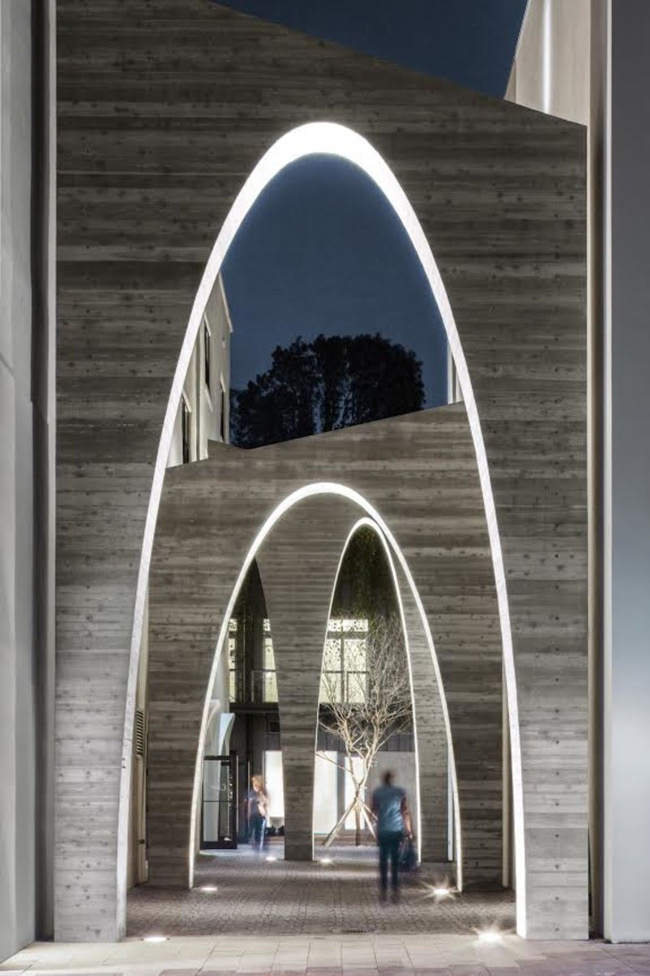
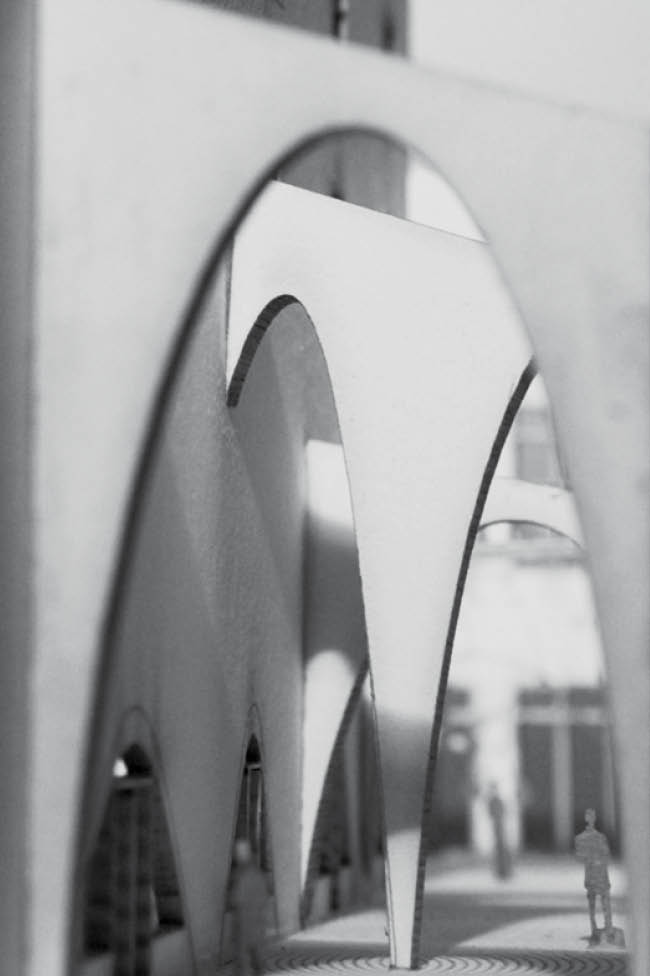
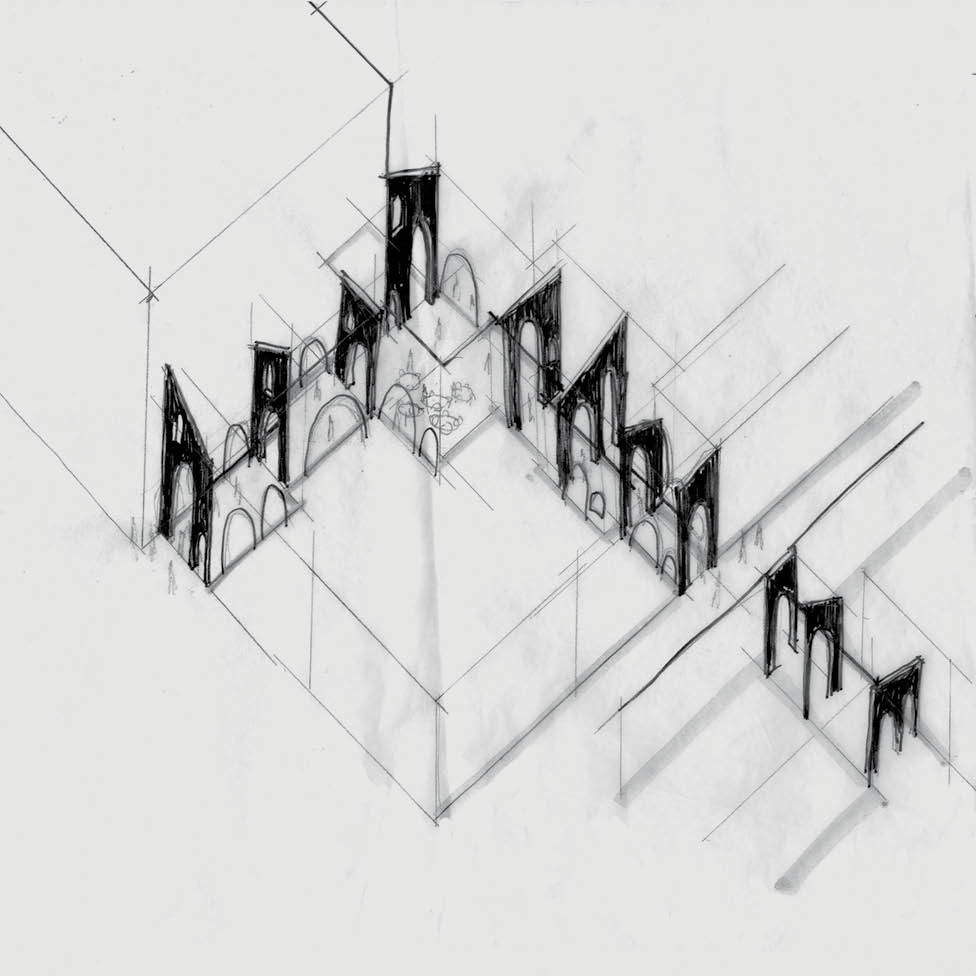
A series of parabolic concrete walls and facades give new life to a nondescript Miami alley with changes in scale, shadow, and light integrating new and existing buildings together with a hidden court full of flowering trees at its center. The alley hopes to maintain its obscurity and crudeness in an otherwise sleek and glossy new shopping neighborhood.
press:
Architectural Digest
awards:
2023 National AIA Small Project Award

10
Portland, OR
2022-present
program: multifamily mixed-use, retail
size: 12 units, 2 live/works, 2 retail
client: Ryan Zygar
status: permitting
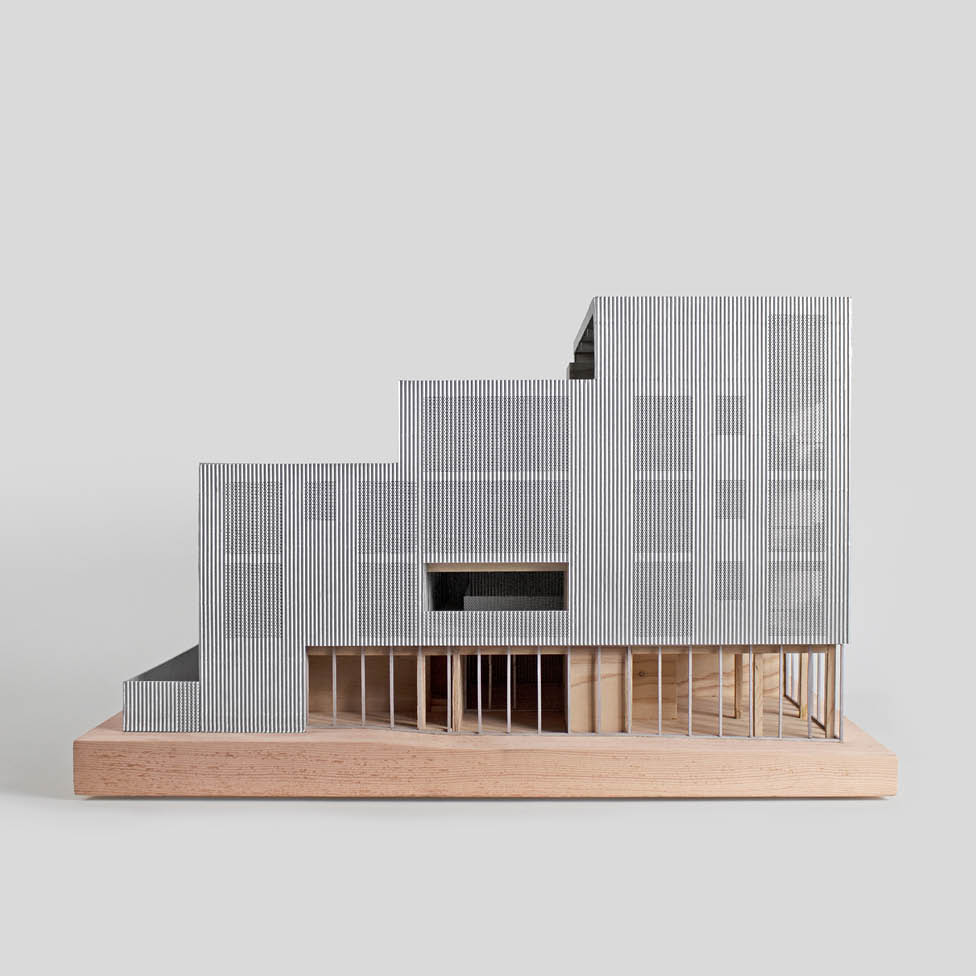
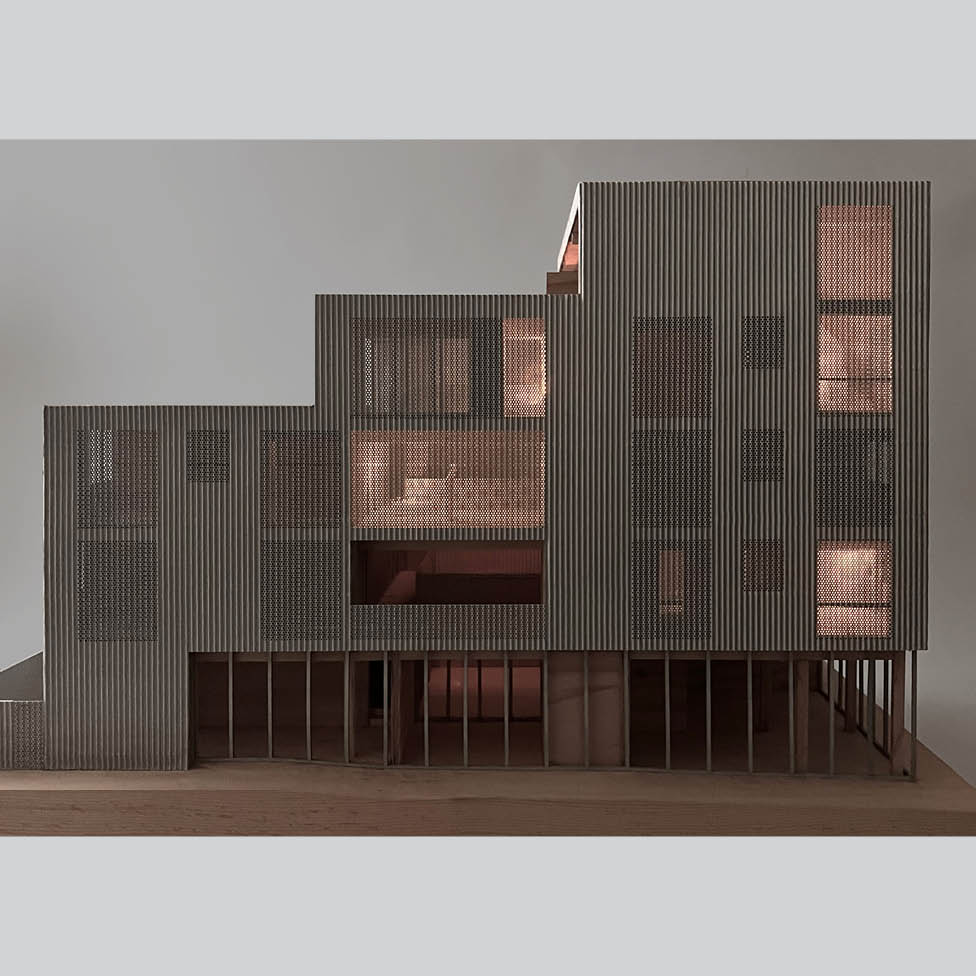
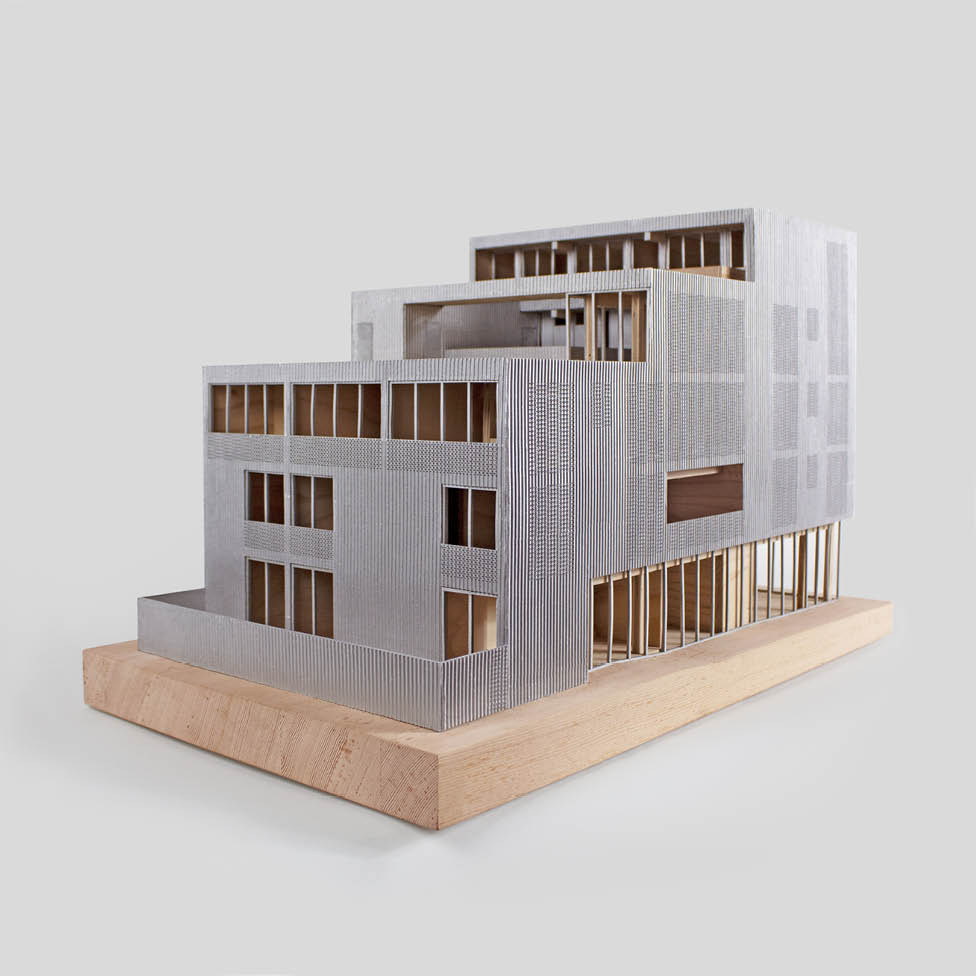
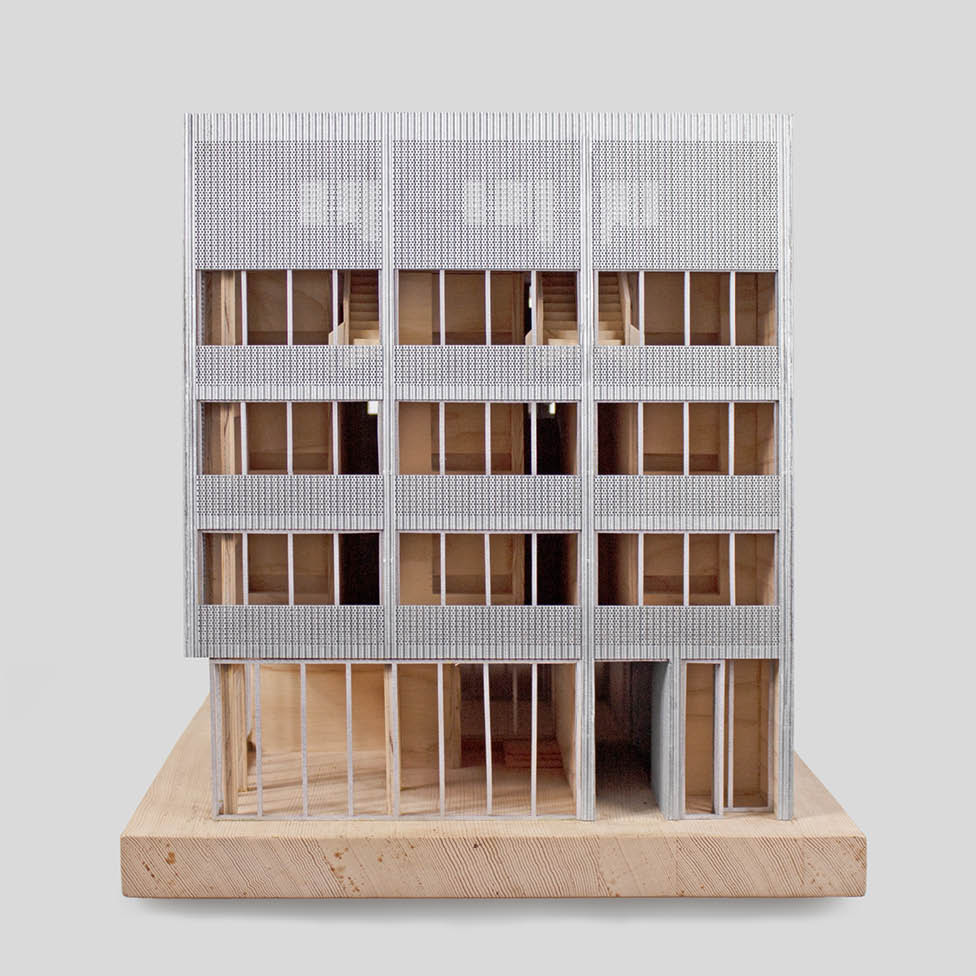
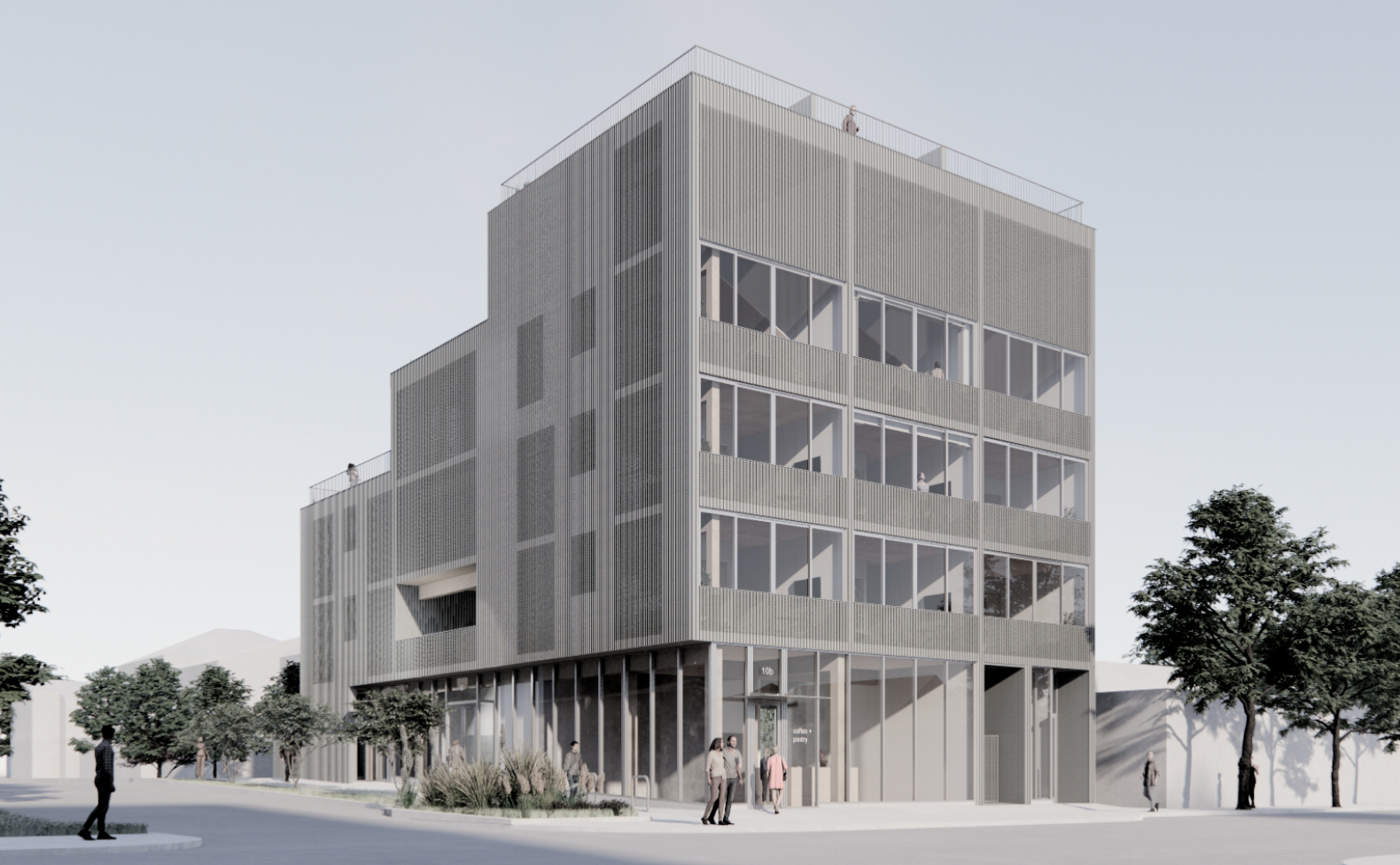
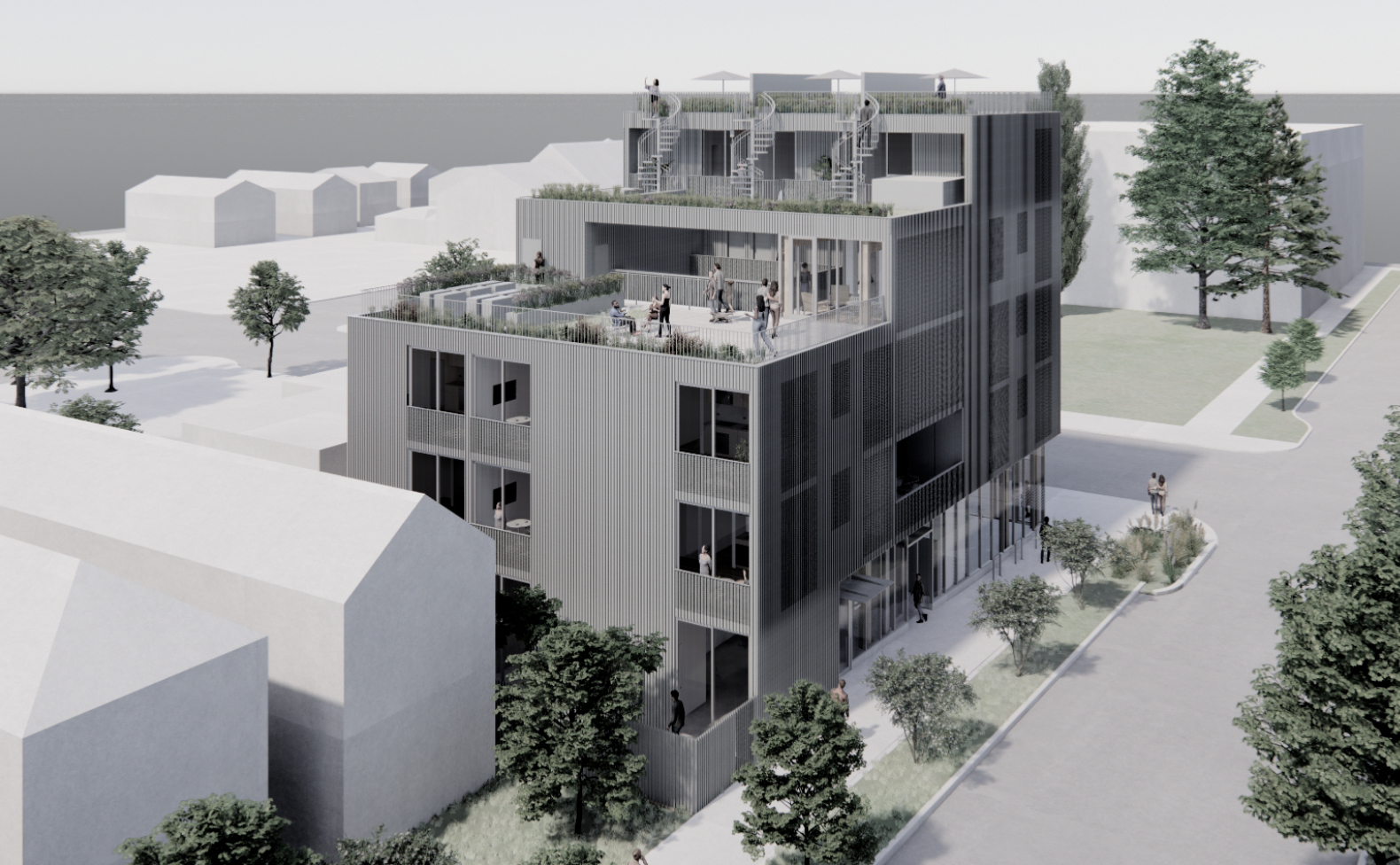
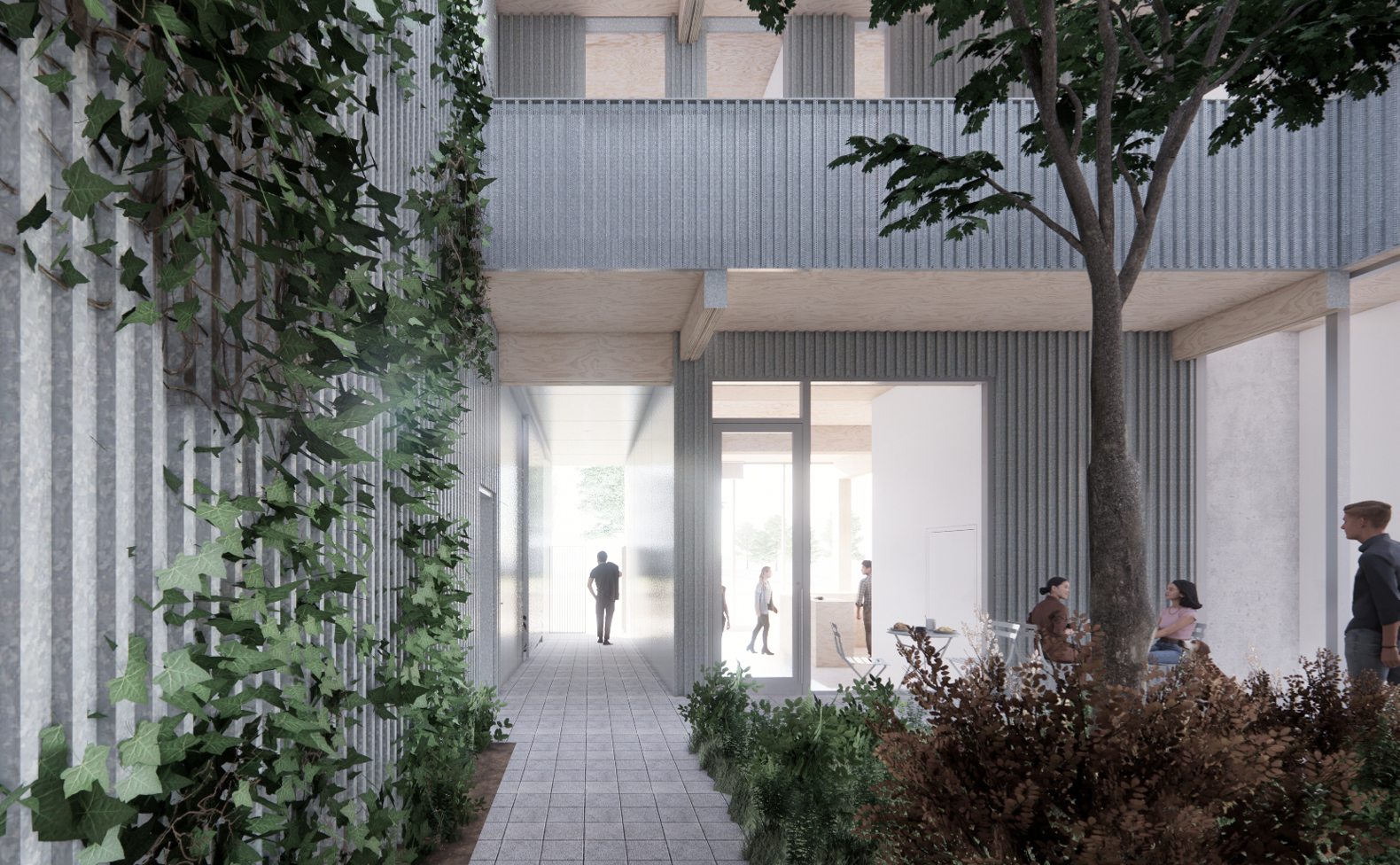
A galvanized curtain wraps this terraced mass timber live-work building. The curtain opens and closes depending on the needs for light, privacy, and ventilation throughout the building. The stepped massing emphasizes the street wall of an established Portland urban corridor while respecting the smaller scale of the adjacent single-family neighborhood.
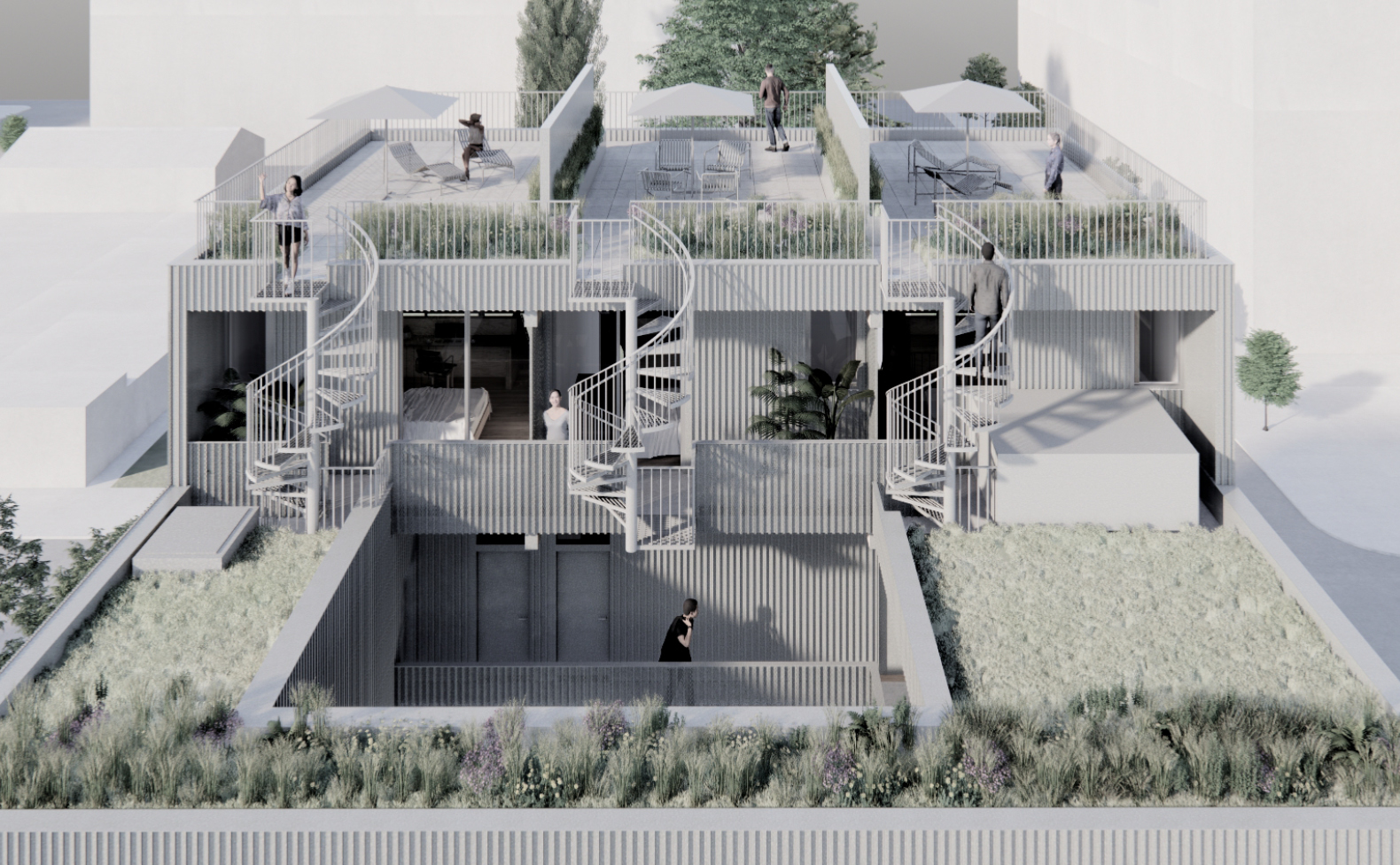
The building contains a mix of uses including retail, live-work lofts, one- and two-bedroom apartments, as well as multiple community gathering areas with views onto the courtyard and street, with a shared amenity room on the lower roof with views east over the neighborhood to Mount Hood beyond.
Utilizing a simple palette of locally fabricated mass plywood floors, beams, and columns, the densely packed terraced section is unified with a corrugated and in places perforated skin of galvanized steel. Each dwelling unit, retail, and community space has light and ventilation from two sides thanks to the courtyard, creating a new model for infill mixed-use buildings in Portland. The future home of DTA will be in one of the live-work lofts facing into the courtyard.

Tree House
Seattle, WA
2018—present
program: single family & ADU
size: 2700 sf
status: construction
size: 2700 sf
status: construction
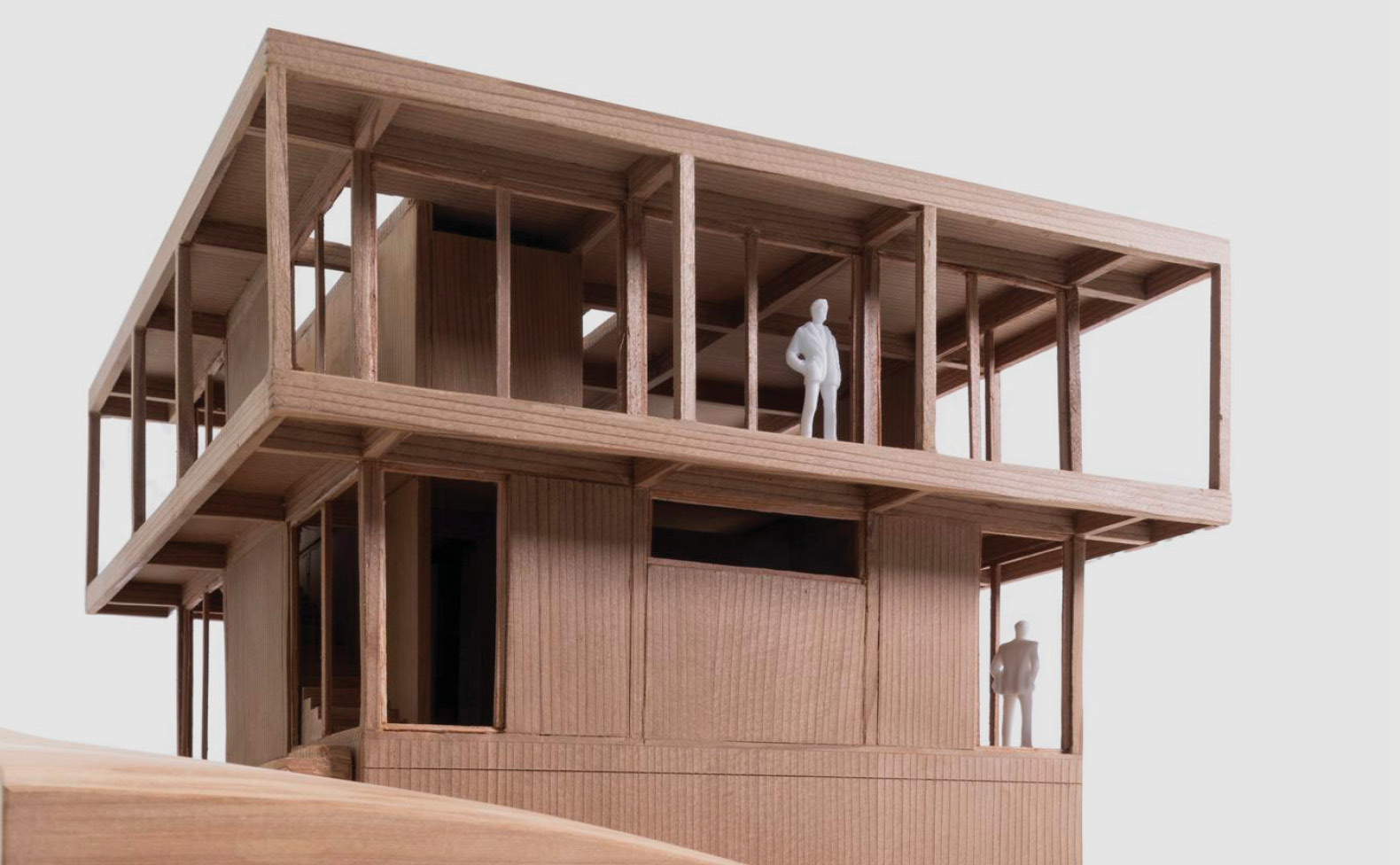
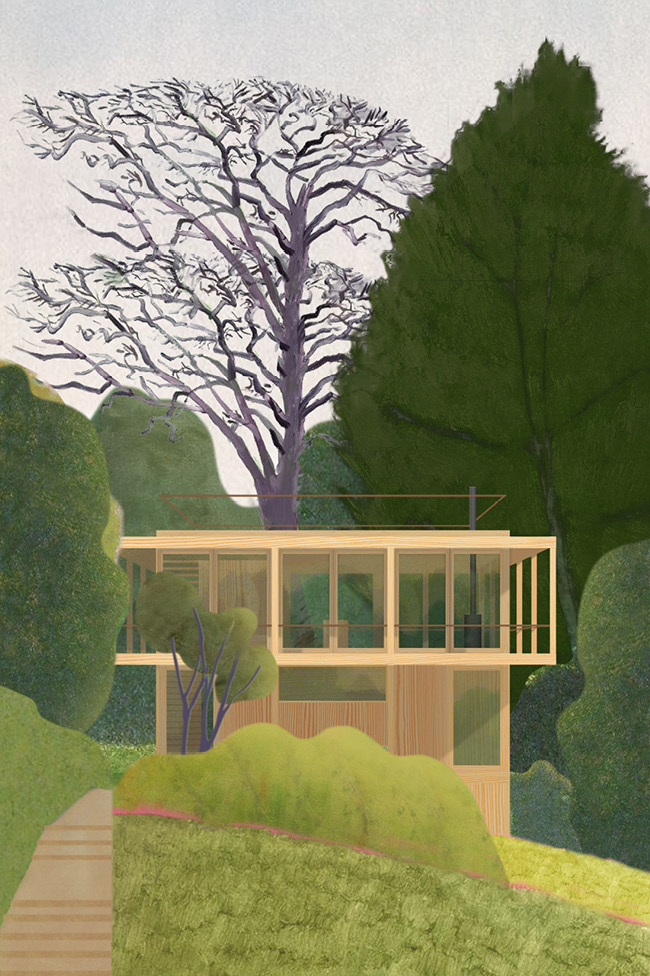
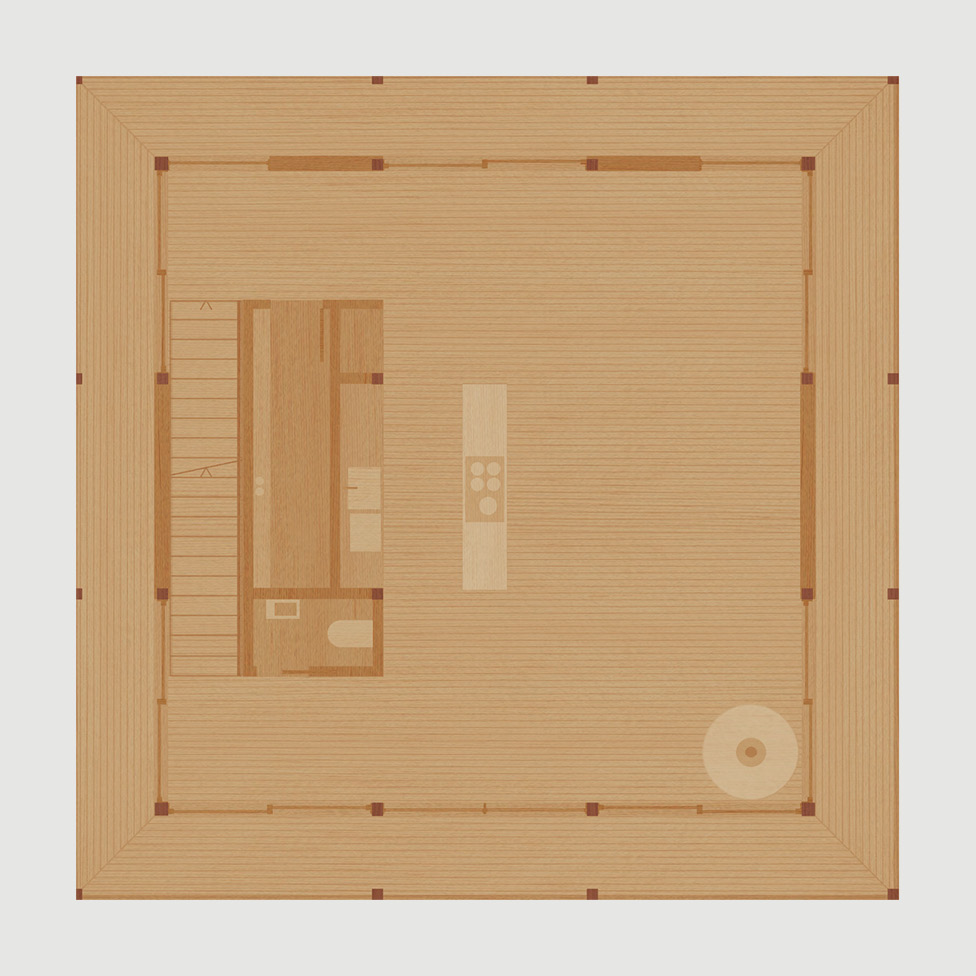
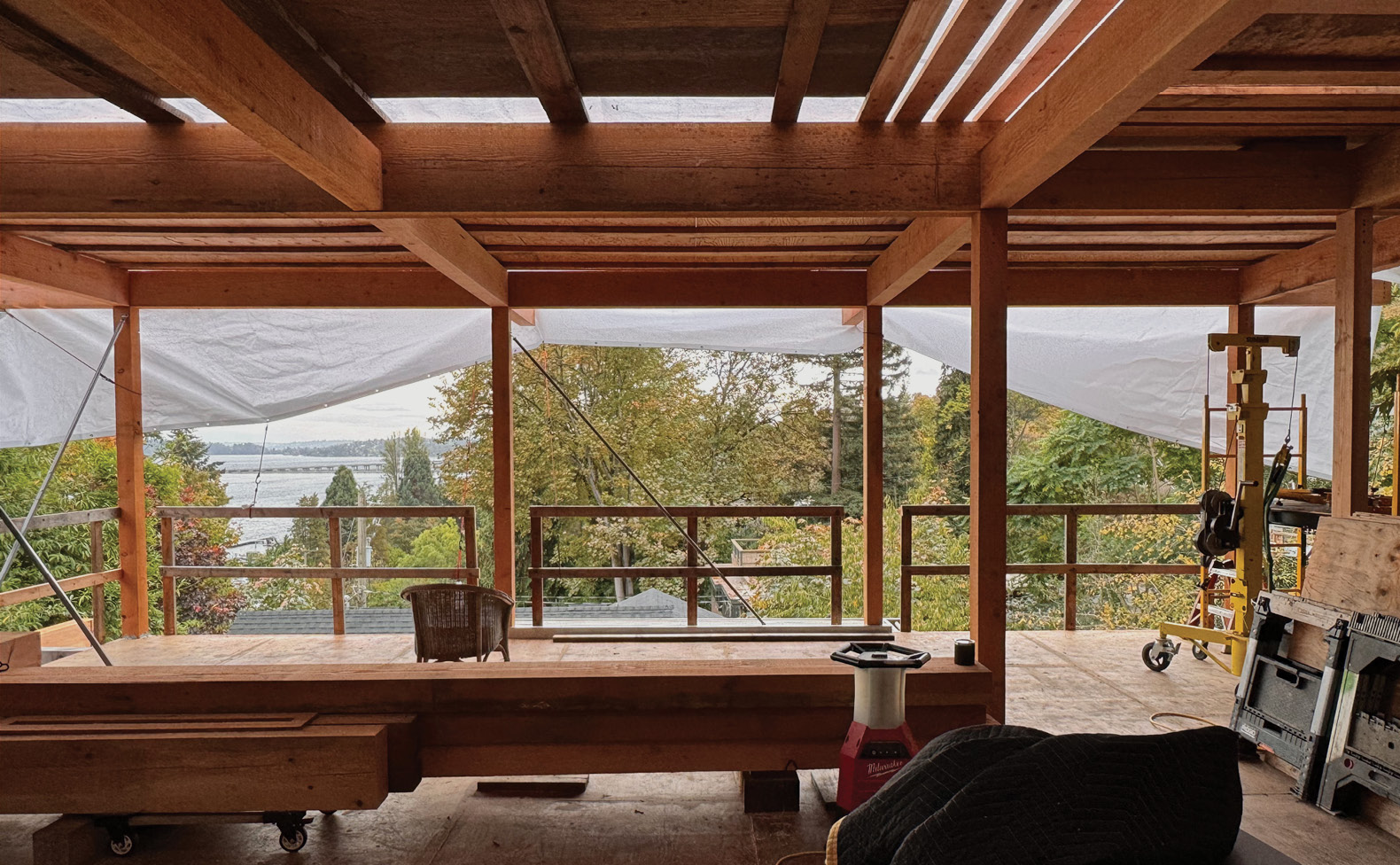
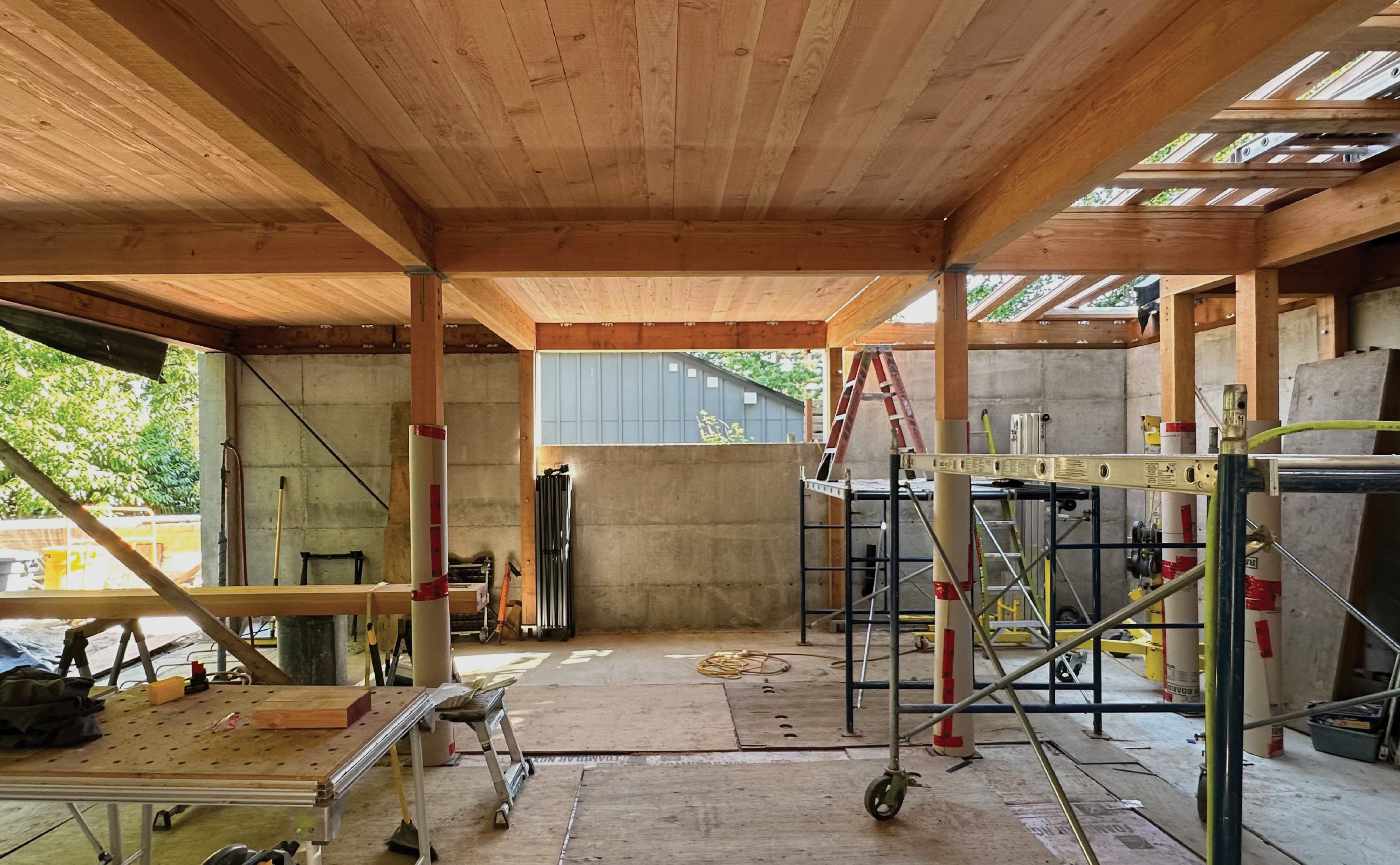
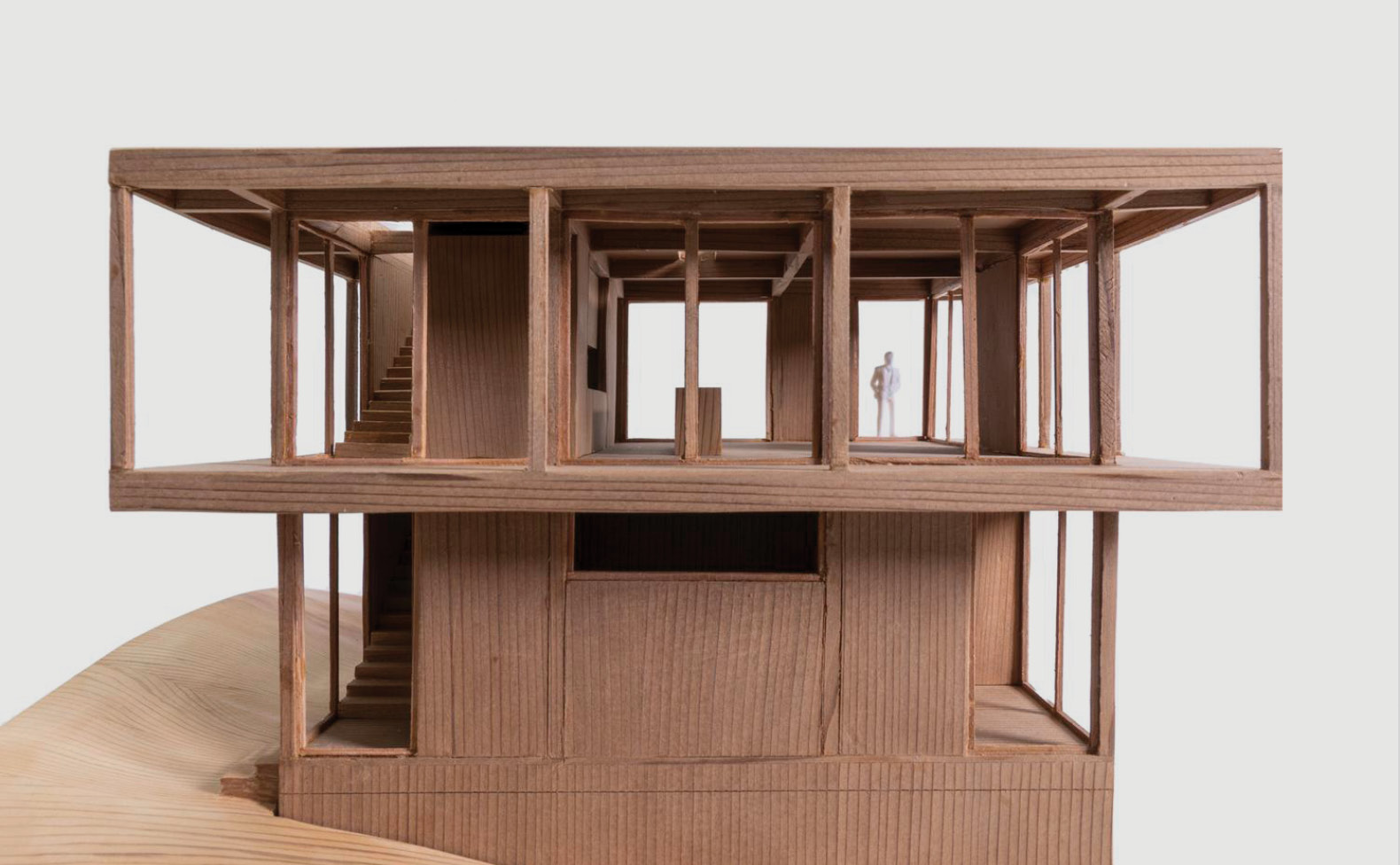
A timber frame house for a carpenter- this house utilizes a structural frame to make a series of intimate rooms in the trees on an east Seattle hillside looking towards Lake Washington. The building increases in size towards the top to utilize views and access to daylight for the most public portion of the house. A covered porch wraps the top floor capped by a roof deck to create multiple ways to live amongst the mature cedars and maples on this tight, urban site.